


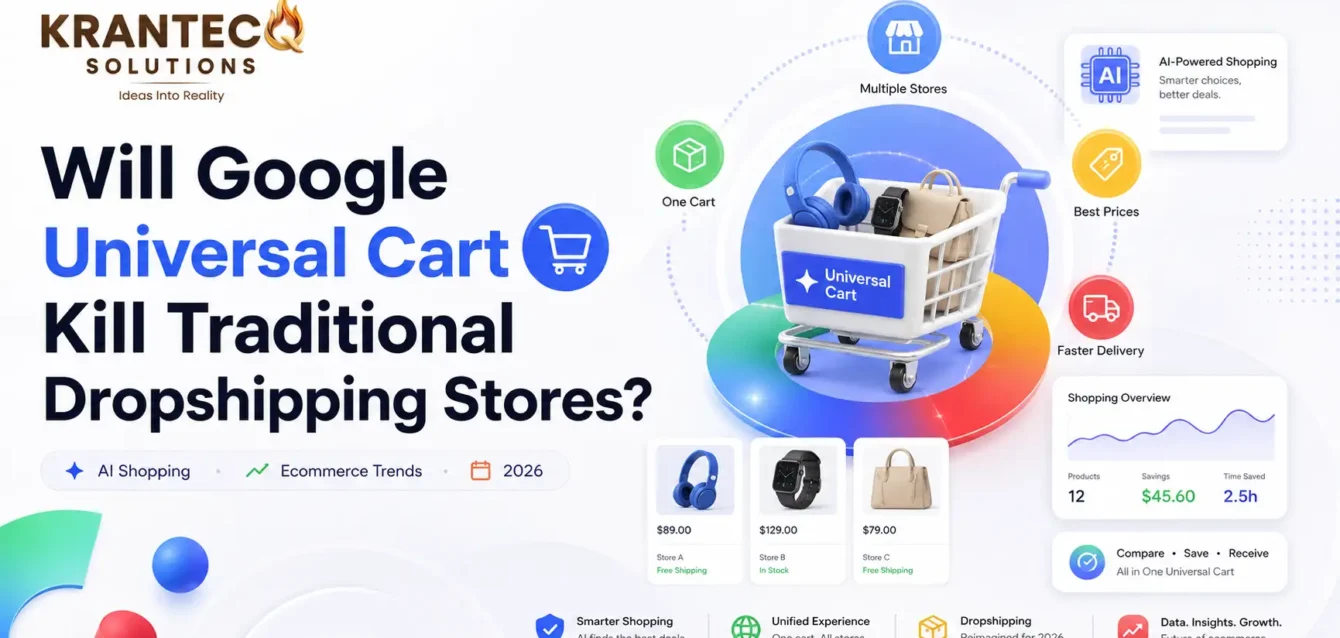
Google Universal Cart dropshipping is becoming a serious topic for online sellers because Google is changing how people discover, compare, and buy products online. Traditional dropshipping stores once depended mainly on ads, viral products, and quick landing pages. But with Google’s AI-powered shopping experience and Universal Cart, ecommerce sellers may need cleaner product data, better inventory visibility, stronger trust signals, and smarter automation to stay competitive.
Dropshipping has survived every ecommerce shift.
It survived Facebook ads becoming expensive. It survived TikTok product trends becoming saturated. It survived customers becoming smarter about cheap imported products. But now, a new challenge is coming from one of the biggest players in online shopping: Google.
At Google I/O 2026, Google introduced Universal Cart, an intelligent shopping cart built for what Google calls the foundation of agentic commerce. It works across Google services, allowing users to add products while browsing Search, using Gemini, watching YouTube, or even reading Gmail. Once a product is added, Universal Cart can find deals, track price drops, show price history, alert users when an item is back in stock, and even flag product compatibility issues.
So the real question is:
Will Google Universal Cart kill traditional dropshipping stores?
The answer is simple: it will not kill dropshipping, but it can kill weak dropshipping stores.
Why Google Universal Cart matters for dropshipping
Google Universal Cart dropshipping is not about ending ecommerce. It is about making online shopping more transparent. Traditional dropshipping works when the seller controls the customer journey.
A user clicks an ad, lands on a product page, reads the offer, and buys from that store. But Google Universal Cart changes the journey because the user may no longer compare products manually across multiple websites.
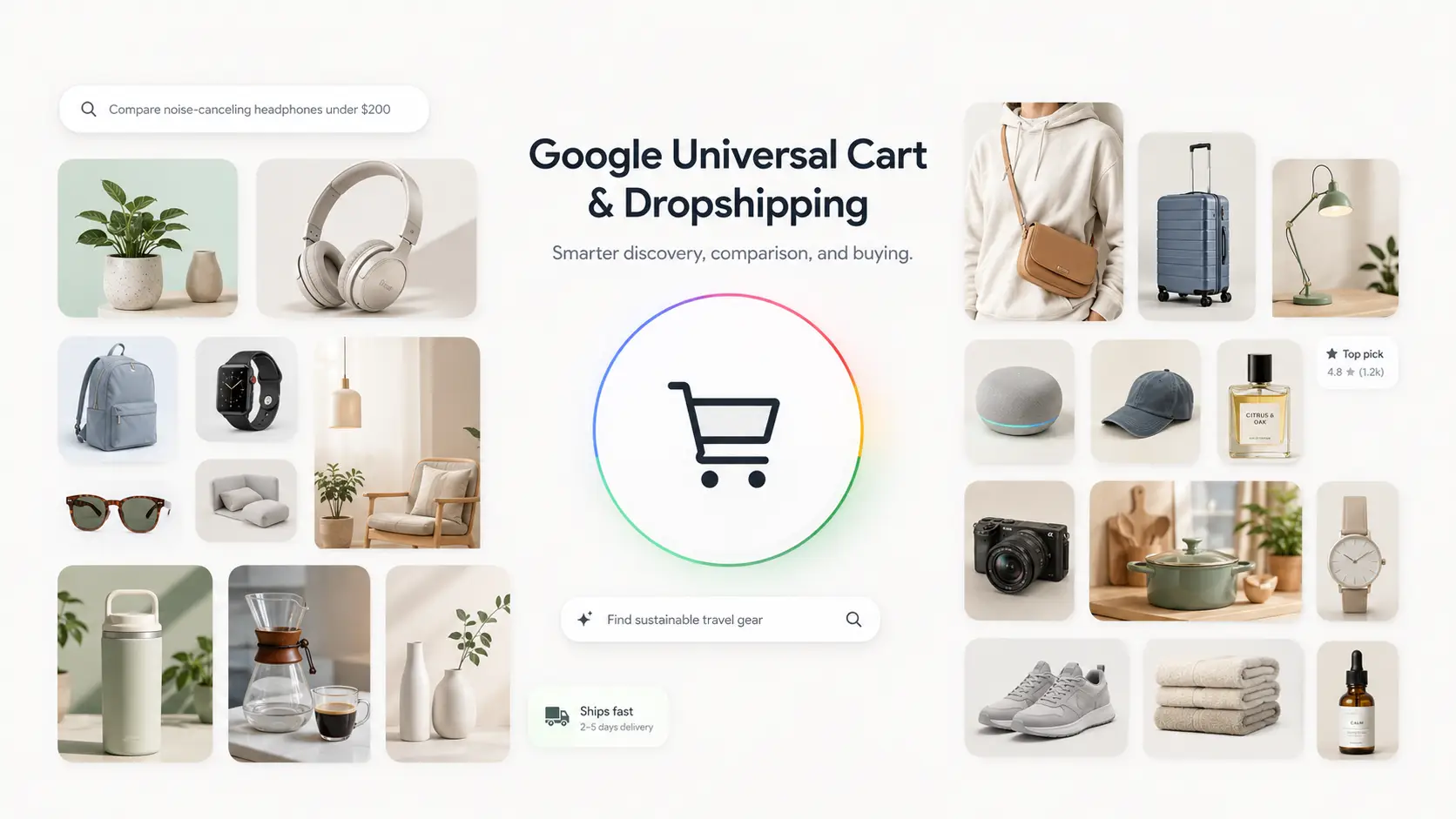
Google’s AI-powered shopping experience can help users compare prices, stock availability, payment benefits, discounts, and product alternatives inside the Google ecosystem. Google says Universal Cart works across merchants and across services, making it a new hub for shopping on Google.
That is a serious change for dropshipping businesses.
A basic store with copied product descriptions, unclear delivery timelines, weak trust signals, and no real product data may struggle when Google can compare better options instantly.
The old dropshipping formula is getting weaker
The old model was simple:
Find a viral product.
Create a product page.
Run ads.
Send the order to a supplier.
Wait for delivery.
This worked when customers had limited information.
But now, the customer can search smarter. Google’s AI Search experience is moving toward more agentic capabilities, where Search can help users get information, compare options, and take action more directly. Google also highlights Universal Cart as a way to manage shopping across Google with intelligent insights.
For traditional dropshipping, this means flashy landing pages alone may not be enough.
The product must be understandable to Google. The price must be competitive. The shipping promise must be clear. The store must look trustworthy. The backend must keep product data updated.
Product data is becoming the new ecommerce advantage
Google’s Universal Commerce Protocol, or UCP, is an open-source standard designed for the next generation of agentic commerce. Google says it helps connect consumer surfaces, businesses, and payment providers, while working with existing retail infrastructure.
For dropshipping sellers, this is the signal:
Your store is no longer just a visual storefront. It is a data system.
Google and AI-powered shopping tools need clean information, such as:
Product title, category, description, price, availability, variants, images, shipping timeline, return policy, reviews, offers, and checkout details.
If this data is messy, outdated, or incomplete, your store may lose visibility in AI-powered shopping experiences.
The biggest threat is transparency
Dropshipping is not being threatened only by Google. It is being threatened by transparency.
Universal Cart can track price drops, show price history, alert shoppers about restocks, and suggest better alternatives. It can also use Google Wallet information to help users understand payment perks, loyalty benefits, and merchant offers.
That means customers may become more aware of:
- Whether the same product is cheaper elsewhere.
- Whether another seller offers faster delivery.
- Whether a product is out of stock.
- Whether there is a better alternative.
- Whether the offer is actually valuable.
This is bad news for low-effort dropshipping stores.
But it is good news for serious ecommerce brands.
Does this mean dropshipping is dead?
No, dropshipping is not dead.
But blind dropshipping is becoming risky.
For sellers, Google Universal Cart dropshipping creates a new challenge: product data must be accurate, updated, and easy for Google to understand.The future will favor sellers who build more reliable ecommerce systems. Dropshipping stores will need stronger product pages, accurate product feeds, better supplier management, automated order updates, customer communication, margin tracking, and clear return policies.
In simple terms:
Dropshipping must evolve from “quick product selling” to “real ecommerce operations.”
Why sellers need more than a basic online store
A basic store can help you start. But it may not help you compete in the Google Universal Cart era.
For sellers, Google Universal Cart dropshipping creates a new challenge: product data must be accurate, updated, and easy for Google to understand. Google says UCP supports commerce journeys from discovery and consideration to purchase and order management through a standardized layer. It is built to reduce integration complexity and help businesses participate in agentic commerce.
That means growing ecommerce sellers should think beyond only design.
They need systems for:
Product feed management, inventory sync, supplier tracking, order tracking, customer notifications, automated pricing rules, payment integration, analytics dashboards, and return management.
This is where custom ecommerce development becomes important.
What dropshipping businesses should fix now
The first priority is product data quality. Use proper product names, detailed descriptions, product schema, clean categories, variants, FAQs, and real images.
The second priority is inventory and supplier visibility. Even if the supplier owns the stock, the seller needs to know availability, shipping delay, and price changes.
The third priority is order tracking. Customers should not have to ask where their product is. Automated tracking emails, WhatsApp alerts, and customer dashboards can reduce complaints.
The fourth priority is margin tracking. Sellers need to know real profit after product cost, shipping, payment gateway charges, ads, discounts, refunds, and returns.
The fifth priority is AI-ready ecommerce structure. Your website should be fast, mobile-friendly, structured, crawlable, and connected to clean product feeds.
How Krantecq Solutions Can Help Dropshipping Stores Upgrade
Google Universal Cart dropshipping will push sellers to build better ecommerce systems, not just basic online stores. At Krantecq Solutions, we help startups, ecommerce businesses, and growing brands build digital products that are scalable, automated, and ready for modern online selling.
For businesses planning to start or scale a dropshipping store, the goal should not be only:
“Build an ecommerce website.”
The goal should be:
“Build an ecommerce system that is ready for Google Shopping, AI discovery, automation, and global customer expectations.”
We can help with:
Mobile App Development
We offer mobile app development services for startups, businesses, and brands. We build custom Android, iOS, and cross-platform mobile apps that help ecommerce and dropshipping businesses improve customer experience, order tracking, push notifications, and repeat purchases.
SaaS Development Services
We offer SaaS development services for startups and businesses. We build scalable, secure, and user-friendly SaaS products, MVPs, dashboards, and cloud-based platforms that can support supplier management, inventory tracking, order automation, and ecommerce analytics.
Custom Software Development Services
We offer custom software development services for startups, businesses, and enterprises. We build scalable, secure, and tailored software solutions such as admin dashboards, CRM systems, ERP tools, supplier portals, order management systems, and automation platforms.
Website Development
We offer professional website development services for businesses, startups, and ecommerce brands. We build responsive, SEO-friendly, fast, and scalable websites that help dropshipping stores improve product visibility, customer trust, mobile experience, and conversion rates.
For dropshipping businesses, these services can help create a stronger digital foundation with better product data, automated workflows, order tracking, customer communication, payment integration, and ecommerce performance monitoring.
Final answer
Google Universal Cart will not kill dropshipping completely.
But it can kill traditional dropshipping stores that depend only on copied products, weak product pages, slow suppliers, unclear delivery, and paid ads.
The future of dropshipping will be more transparent, more competitive, and more technical.
The winners will be sellers who build real ecommerce brands, clean product data, automated operations, better customer communication, and reliable backend systems.
So the real question is not:
“Will Google Universal Cart kill dropshipping?”
The real question is:
“Is your dropshipping store ready to be discovered, compared, and trusted inside Google’s AI shopping ecosystem?”
If the answer is no, now is the time to upgrade.